
Back in the 1980s, I lived with a man named Jack who had an adventurous soul. I was nineteen, and he was thirty-three. When we first met, it was in a bar—and yes, I was underage. He asked for my number, and I gave it to him after some hesitation, never expecting him to call. I’d nearly forgotten about meeting him when he did call. I was confused at first, unsure who I was talking to, but after a few minutes, I remembered. He asked me out, and I said yes. That was the beginning of our relationship.
Often, we took separate vacations. Jack had a yearly gathering he loved
to attend, while I usually visited my mom in California. One year, I went to see my parents , and Jack decided instead to go up to Billings, Montana. Jack was musically inclined—he could play rhythm guitar, bass, mandolin, and banjo—and he had a voice
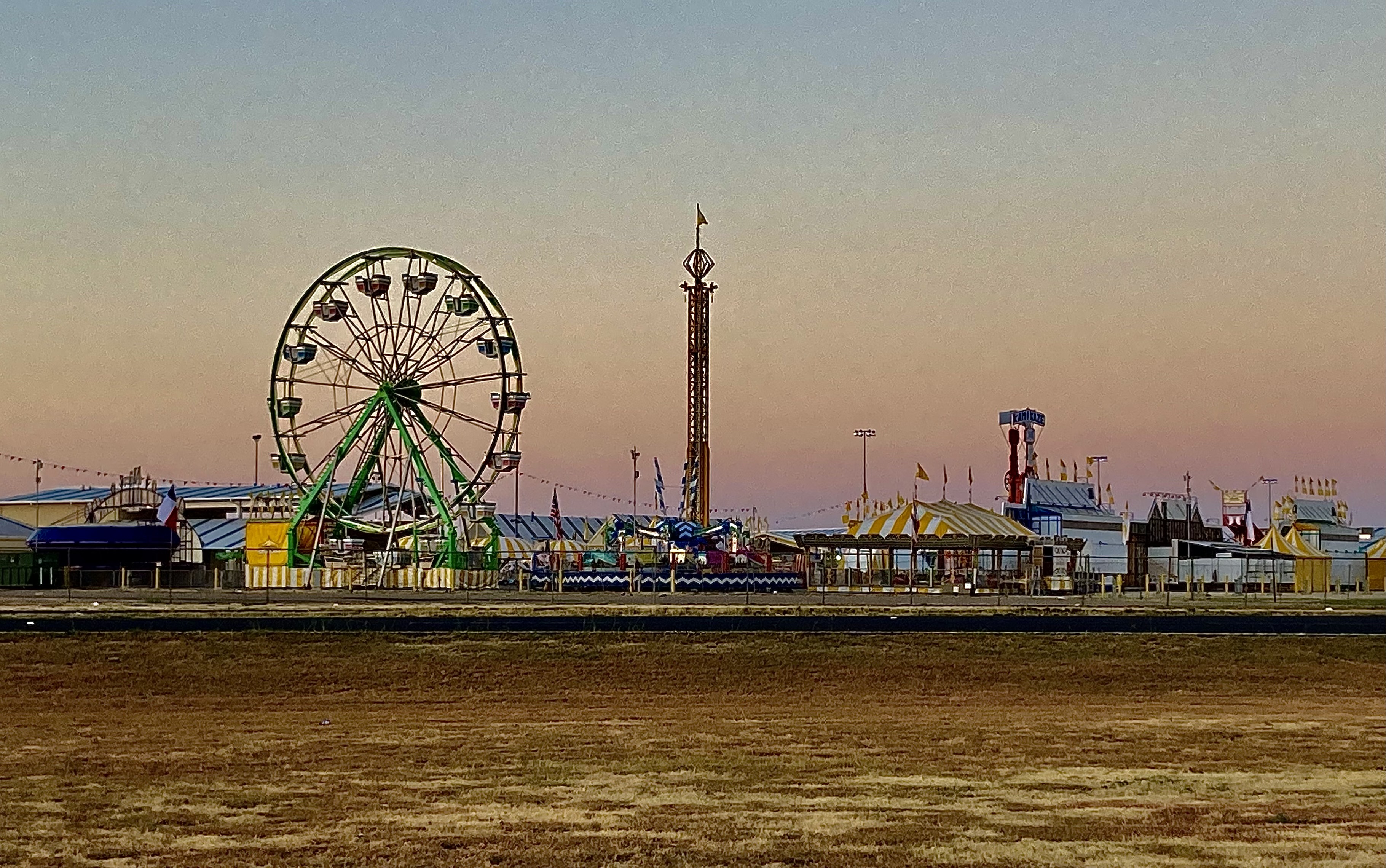
that carried. While in Billings, he met a man named Ray. A one-man band who made his living traveling from fair to fair with his wife, Linda, and their three-year-old daughter. They lived in a converted bread truck, pulling a trailer behind them.
For reasons I would come to understand later, that life fascinated Jack.
He and Ray spent time together, talking and playing music. Jack met Ray’s family, and they all got along well. The idea of traveling the country, playing music, and selling things—two of
his favorite passions—lit something inside him. He couldn’t stop thinking about it.
When you’re young and spending a week with your parents, the time never moves fast enough. I loved my parents, but I was ready to go home.
Jack picked me up from the old Stapleton Airport in Denver. I could tell he had something on his mind. We stopped at one of our favorite hangouts, a college bar and restaurant. While I ate, he told me about the man he’d met in Montana. The man was a musician with a family. They had a life on the road. I could tell he wasn’t just sharing a story; he was testing the waters. He said, “It sounds like something I want to do. I want to travel the country, play music, and sell
things.” Everything he said sounded exciting, even romantic in a way. I knew there were rough edges to the plan, but to Jack, it was an adventure. He asked if I wanted to go back up to Billings to meet them, and I said yes. The next morning, we hit the road. It was an eight-hour drive, and by the time we arrived, the fairgrounds were
buzzing with people. As we walked through the booths, I scanned the crowd—so many faces, so much color. Then I saw her. A young woman in a fitted red dress. She stood out instantly. I couldn’t help but notice her, and I saw Jack notice her too.
Back in Denver, life slipped into its usual rhythm, but something between us had shifted. Jack couldn’t stop talking about Ray and Linda—their freedom, their simplicity. “Can you imagine waking up somewhere new every week?” he’d ask. “Just playing music, selling things, and living life on your own terms?” I’d nod, but I wasn’t sure. I liked our routines. I liked knowing what tomorrow would look like. Jack, though, had always been drawn to the unknown. That was part of what made me love him—and what I feared might take him away. A few weeks later, we sat on the porch. We were watching the sunset. He said quietly, “Ray and Linda are heading to Arizona for the winter
fairs. They said we could tag along.” I set my drink down. “You mean travel with them?
Live like that?” He smiled. “Just for a while. You might even like it.” I didn’t laugh. I just looked at him, realizing he wasn’t asking for permission—he was asking me to
understand. Over the next few days, I noticed his restlessness. He played his guitar more, hummed under his breath, and sorted through boxes of old records and flea
market finds. By the end of the month, he had made up his mind. “Em,” he said one night, “I’m going with them. You can come if you want—but I have to go.” I looked at him and nodded. There was no anger, just sadness. Jack had always belonged to the road.
I was just lucky to share a stretch of it with him. He left a week later, the van packed with instruments and boxes of things he swore he could sell. Ray and Linda waited on
the edge of town. I stood on the porch and watched the van disappear into the distance. The crickets hummed in the still air. For weeks afterward, I’d still expect to hear his guitar drifting from the next room. But the house was quiet now—not heavy,
just still.
Years later, time softened everything. What once hurt became something I could remember with warmth. Two years passed before I heard from Jack again. A letter came one morning, postmarked from New Mexico. His handwriting was the same—slanted, hurried. He wrote about the road, the music, and the joy of waking up
somewhere new. He mentioned Ray and Linda and their daughter, now starting school on the road. At the end, he wrote: “I think about you sometimes when the sun sets behind the mountains. Hope you’re still walking your own path, Em.” I read it over
and over until the words blurred. I didn’t write back. There was nothing left to say. Years went by. I moved, changed jobs, and built a quiet life. Every so often, I’d hear a song that reminded me of Jack. It could be a banjo riff or a voice like his. I would feel a pang, not of regret but of remembering. A friend once told me they’d seen him at a fair in Oregon, older but smiling, still playing his music. I believed it. Loving Jack taught me something important: not every love story ends with forever. Some just fade into the horizon, carried by the hum of an engine and the echo of a song. Even now, I think about that day in Billings. The fairgrounds were alive with laughter. I remember the woman in the red dress. Jack’s eyes were full of wonder. Some moments stay with you forever, like photographs in the mind. That was the day I learned that love doesn’t always mean holding on.
Sometimes, it means letting go—and wishing them well on their way.


 Raven's Space